
How and Why to Filter Digital Clutter
24 August 2026
Imagine eating nothing but fast food every day while sincerely hoping to maintain perfect health. This is exactly what we do to our brains when we mindlessly consume digital clutter, pseudo-expert advice, and loud headlines.
In this article, we will break down exactly how social media algorithms trap us in dopamine loops, why constant information noise silently exhausts the nervous system, and how simple filtering rules can turn your smartphone from a source of stress into a tool for deep, calm personal growth.
The Era of Information Overload
Have you ever wondered how much time your eyes are glued to a screen each day? According to global digital behavior reports (specifically, DataReportal's annual studies), the average modern person spends about 6 hours and 40 minutes online daily. More than a third of this time vanishes irretrievably into the endless scrolling of social media feeds. The numbers are staggering: we surrender over 100 days of our lives to the digital world every single year. But the main question is: does this time make us smarter, calmer, or more effective?
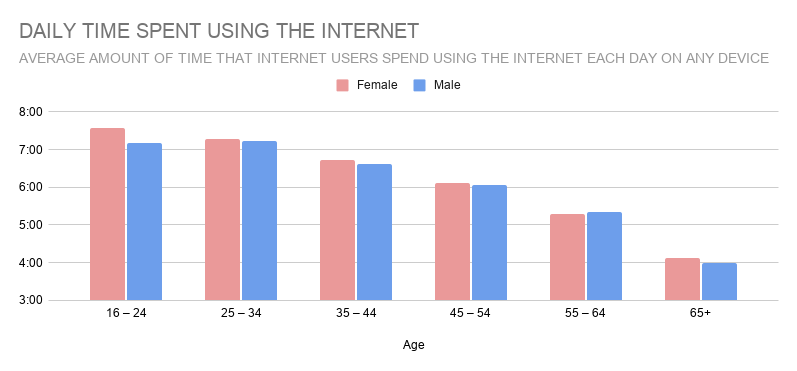
Today, we have access to all the world's knowledge in seconds, but instead, we often become hostages to information fast food. What exactly is "digital clutter"? It’s content created solely to capture your attention without offering any practical or intellectual value in return. This category includes everything that artificially triggers a quick dopamine rush:
-
Clickbait headlines that promise a sensation but deliver empty words.
-
Emotionally charged posts lacking deep analysis, created exclusively to spark panic or outrage.
-
Pseudo-expert content that simplifies complex, fundamental topics into absurd 15-second entertainment clips.
This kind of content demands zero focus or critical thinking. It is consumed automatically, yet it leaves behind a lingering sense of exhaustion. By overloading our brains with chaotic fragments of data, we gradually lose the ability to focus on complex tasks.
In the modern world, the ability to strictly filter incoming data is no longer just a trend—it's a basic skill. Consciously rejecting unnecessary drama in your information field helps free up colossal amounts of energy. When you start carefully choosing what to read and watch, you protect your nervous system from artificial emotional rollercoasters.
The Anatomy of Noise
It seems logical: if information fast food is so exhausting, why don't we just put the phone down? The short answer is: it has nothing to do with a lack of willpower. It’s all about how the modern attention economy is built.
The Attention Economy and Dopamine Traps
Social media and media platforms aren't selling you content—they are selling your time and attention to advertisers. To keep you glued to the screen for as long as possible, algorithms use deep neurobiological mechanisms. When you scroll through a feed and stumble upon something interesting or emotional, your brain gets a microdose of dopamine—a neurotransmitter responsible for anticipating a reward. It works exactly like a slot machine: you never know if the next video will be funny, useful, or infuriating. This sheer unpredictability is what keeps you scrolling, forming a strong habit.
The Illusion of Knowledge Over Real Development
Beyond purely entertaining content, algorithms frequently push supposedly useful materials: one-minute videos on financial literacy or five quick psychology tips. By consuming these formats, we fall into the trap of illusory competence. Watching dozens of short educational videos creates a false sense of development. In reality, these fragmented facts evaporate from memory instantly and build zero actual skills. True self-education requires systems, effort, and time for reflection, whereas fast content merely imitates the learning process.
The Zero Drama Approach: Breaking the Emotional Cycle
Another hook the media constantly uses to catch us is artificial drama. Algorithms know perfectly well that outrage, fear, or scandals hold attention far better than calm analysis. Headlines grow increasingly louder, and events are framed to trigger maximum emotional spikes. The only defense against this is adopting a Zero Drama mindset. This means consciously shifting to a cold, rational style of consuming information. You learn to ignore authors' emotional manipulation, filter out the verbal noise, and seek out pure facts, focusing solely on what genuinely matters for your goals.
What Does Science Say?
Constantly consuming chaotic information literally alters the architecture of our brains. In his book The Shallows: What the Internet Is Doing to Our Brains, American researcher Nicholas Carr (drawing on numerous neuroplasticity studies) proves a disturbing fact: the habit of constantly shifting attention and rapid scrolling destroys the neural pathways responsible for deep thinking. The brain adapts to surface-level "scanning" of data, making it physically difficult to read long, complex texts, analyze comprehensive ideas, or concentrate on a single task for an extended period.
How Information Fast Food Destroys Mental Health
Information overload doesn't just steal your time—it has very real consequences for your body. When you consume digital clutter, your nervous system operates at its absolute limit trying to process gigabytes of disjointed data.
Doomscrolling and Chronic Anxiety
The habit of endlessly scrolling through feeds in search of negative and emotionally heavy news (doomscrolling) keeps the brain in a state of constant tension. Even if you are just reading arguments in the comments or watching dramatic videos, your body reacts by releasing cortisol, the stress hormone. The nervous system does not distinguish between physical danger and a virtual emotional rollercoaster. As a result, you experience background anxiety, sleep issues, and constant fatigue, even if you spent the entire day in a perfectly safe environment.
Loss of Focus and the Ability to Think Deeply
Remember that feeling when, after an hour of watching short videos, you try to sit down to study or tackle a complex work project? Reading a long text or attentively listening to an hour-long lecture becomes almost physically uncomfortable. This happens because the brain gets used to overstimulation and demands fresh hits of quick dopamine. To regain the ability to think deeply—that state of calm focus where new skills are genuinely acquired and insights are born—you must intentionally lower the volume of information noise.
According to years of research by Professor Gloria Mark from the University of California (UC Irvine), the average time a modern person can focus on a single screen has shrunk to a mere 47 seconds. What's worse: if you get distracted by a notification or decide to check your feed "just for a minute," it takes your brain an average of 23 minutes and 15 seconds to fully return to its previous state of concentration.
Decision Fatigue
Every scroll, every glance at a bright banner, and every headline you read requires a micro-decision from your brain: stop or keep scrolling, agree with the author or not. Psychologists call this the saturation effect, or decision fatigue. After spending your entire daily cognitive reserve on filtering an endless stream of data, you simply have no energy left by evening to make choices that actually matter. Instead of picking a direction for professional growth or starting a new course, an exhausted brain takes the path of least resistance: opening social media once again.
A Practical Guide to Digital Hygiene
Understanding how algorithms work is only the first step. To reclaim your focus and energy, you need more than just willpower; you need a clear system of rules. Digital hygiene should become a routine as natural as brushing your teeth. Here are four practical steps to help clean up your digital space:
1. Conduct a radical subscription audit. Your newsfeed is your responsibility. Set aside 20 minutes to review the list of channels, pages, and bloggers you follow. Apply a strict filter: if a source doesn’t bring you specific practical value, doesn't inspire you, or regularly provokes anxiety or outrage—unfollow without mercy. Keep only those resources that publish verified facts, deep analysis, or high-quality educational materials. The less visual and semantic noise around you, the easier it is for your brain to breathe.
2. Implement an "Information Diet." The main problem with modern content consumption is its background nature. We check the news at breakfast, in line, and while working. To break this cycle, introduce the rule of windows: allocate strictly limited time slots for checking information. For instance, 15 minutes in the morning and 15 minutes in the evening. The information flow should be shut off the rest of the time. Turn off all push notifications from news apps and social media. If something truly global and important happens in the world, you will definitely hear about it without constantly refreshing your feed.
3. Use a critical thinking checklist (The 3 crucial questions). Before you believe new information, save it, or share it, make it a habit to pause your emotions and run the text through three basic questions:
-
Who is the author, and what are their qualifications? Are they an expert in this topic, or just repeating someone else’s thoughts for engagement?
-
Where is the primary source? If a text makes loud claims without linking to studies, official documents, or direct quotes, it is most likely a manipulation.
-
What emotion is this content trying to evoke in me? This is a key marker. If reading it leaves you feeling anger, panic, or a sharp sense of injustice, it’s a sign that someone is trying to manipulate you. Quality analysis leaves you calm and informed.
4. Practice mindful consumption. The hardest part is breaking automatic habits. Learn to catch yourself in the exact moment your hand reaches for your smartphone. Ask yourself: "Why am I opening this app right now? Am I looking for specific information, or am I just bored or anxious?" If it’s an automatic reaction to fatigue or stress, put the device down and take a short pause. A deep breath, a glass of water, or a few minutes of silence will help stop the chaotic racing of your thoughts and return you to a conscious state.
From Passive Consumption to Deep Self-Education
When you remove information noise from your life, a sense of vacuum appears, and hours of free time are unlocked. If you don't fill this space with something truly valuable, your brain will habitually reach back for those dopamine traps. That is why digital hygiene is only the first step. The next step is a conscious transition to true self-education.
Real changes in mindset and life only happen through fundamental, structured knowledge. One high-quality course or in-depth lecture provides a complete picture and is immediately geared towards real-world practice—unlike fragmented social media videos that merely create the illusion of development. Your smartphone is a completely neutral tool, and you are the one who decides whether it becomes a source of stress or a personal learning hub.
Filtering the noise is about taking back control of your own resources. Don’t try to change all your habits in one day. Start with a few simple steps right now:
-
Open your subscriptions and delete at least 5 channels that offer zero practical value.
-
Turn off notifications in the apps that distract you the most throughout the day.
And invest your newly freed time where it will truly bring results. Instead of spending another hour in your newsfeed, check out the Learn2Go self-learning catalog. Choose a topic you’ve long wanted to master, and begin your deep, structured dive into new knowledge.