
Generating Problems: How Much Time Does AI Actually Save You?
24 August 2026
Remember the moment you first generated a text or report using AI and thought, "That's it, my job will now take five minutes a day"? The euphoria of watching a simple prompt turn into a finished result in seconds was incredible. But time has passed, and today you find yourself sitting for the second hour straight, trying to get the neural network to stop inventing facts, writing in plastic boilerplate phrases, or simply to get it to do exactly what you asked for in the first place.
The Magic Button Illusion: Where Your Hours Actually Go
"Do 5 hours of work in 5 minutes!" — this is the main marketing promise of the AI era. On paper, it looks perfect: you delegate the routine and go grab a coffee. In practice, however, this much-desired "time-saving" often turns into an endless cycle of debugging, prompt refinement, and exhausting fact-checking.
If you feel like the technology sometimes demands more resources than it frees up, you're not alone. And it absolutely doesn't mean you don't know how to use it. According to a massive 2024 study by the Upwork Research Institute, a true "productivity paradox" has emerged in the market. While 96% of executives expected a massive boost in team efficiency, 77% of employees admitted that AI actually only increased their workload and contributed to faster burnout.

Photo by Andrea Piacquadio: https://www.pexels.com/photo/man-in-white-shirt-sitting-on-chair-3966781/
Why does this happen? The secret is that AI doesn't just speed up processes; it fundamentally changes the very nature of our work. Instead of being creators who build products from scratch, you suddenly become a fact-checker and editor for a tireless but highly overconfident digital intern. And this role shift drains far more energy from us than is commonly believed.
The "Just One More Prompt" Syndrome
Have you noticed how easy it is to fall into this trap? The first draft is generated in ten seconds, and it looks... almost decent. You think, "I'll just ask it to tweak the tone a bit, add some specifics, and it will be perfect". And that's exactly when the "just one more prompt" syndrome kicks in.
You write a clarification. Then another one. Then you explain that the second paragraph needs to be shortened and the inappropriate joke at the end should be removed entirely. By the fifth iteration, the neural network suddenly forgets the initial context, changes the structure, and spits out material that's worse than the first version.
The mirage of a quick result makes us believe we are on the finish line, when in reality, we've only just stepped up to the start. The biggest time sinks hide in three traps:
-
The Specificity Problem. The more precise the result you need, the harder it is to get. If you just need it to "write a text about motivation," AI handles it instantly. But if you need to compile a spreadsheet with specific calculation rules, account for certain exceptions, or write logic with strict constraints, explaining all the nuances to the machine will take much longer than doing the work yourself.
-
Context Loss. During a long conversation, AI inevitably suffers from "amnesia". You fix one detail, and another breaks. The AI forgets instructions you gave it three steps ago, and you have to start all over again.
-
Instant Technical Debt. This isn't just a subjective feeling; it's a proven fact. GitClear conducted a large-scale study analyzing over 200 million lines of code written between 2020 and 2024 to assess the real impact of AI assistants on productivity. It turned out that "code churn" (the rate at which newly written code has to be completely rewritten or deleted within two weeks) had doubled.
AI truly delivers results at breakneck speed, but the quality is often mediocre. We save 10 minutes at the start, only to lose two hours later rewriting and bringing the artificial output up to our human standards.
The Cognitive Load Shift
You may have caught yourself feeling a strange sensation: after an hour of "fast" work with AI, your head is buzzing as if you just took a difficult exam, even though you physically wrote almost nothing. This isn't laziness or a lack of focus; it's basic neurobiology. Working with AI requires an entirely different type of cognitive load that we aren't used to yet.
When you create something from scratch—for example, plan a curriculum, develop a strategy, or write an article—your brain can enter a flow state. You build an idea step by step, organically developing your own thought.
But when you are presented with a ready-made canvas of generated text or code, you automatically switch into a mode of rigid critical analysis. Neurobiologists know that it is much harder for our brains to continuously hunt for logical loopholes, evaluate styling, and fish out "artificiality" in someone else's material than it is to formulate our own idea. You have to constantly be on guard, checking every word so you don't miss an absurd mistake.
Add to this another phenomenon: decision fatigue.
Imagine you asked AI to suggest a topic for your next project. It instantly spits out 15 options. Sounds great, right? But UX researchers, like the experts at Nielsen Norman Group, have repeatedly emphasized that an abundance of choice often just paralyzes us. Instead of picking one idea and running with it, you are forced to spend valuable energy comparing, weighing, and sorting through 15 mediocre proposals.
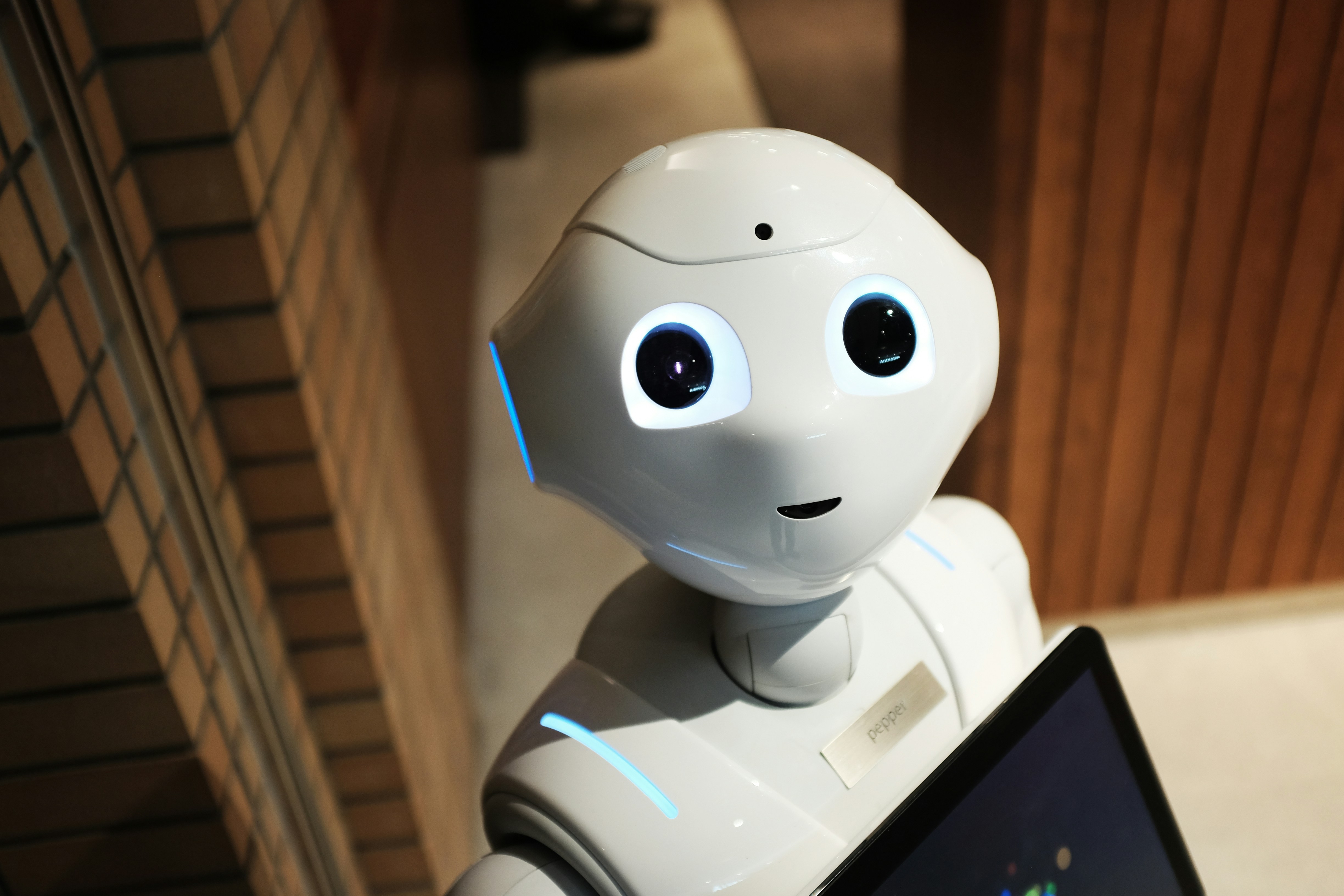
Photo by Alex Knight on Unsplash
Every generated option you have to evaluate subtly but surely drains your mental reserves. As a result, having saved time on the mechanical typing of text, you spend twice as much cognitive energy processing it.
Hallucinations and the Fact-Checking Trap
This problem becomes especially acute when you use AI tools for self-education, expanding your horizons, or analyzing unfamiliar topics. AI doesn't know how to doubt itself. It won't say, "I'm not sure, but here is what I found". Instead, the algorithm generates an absolutely confident, logically structured, but sometimes completely false answer—a so-called hallucination.
And here lies the biggest paradox of lost time. Researchers from Harvard Business School, in collaboration with BCG, conducted a revealing experiment where highly skilled consultants performed complex tasks using AI. It turned out that when the algorithm faced a truly complex task, people made mistakes 19% more often than those working independently.
The authors of the study called this phenomenon the "Trust Trap". AI delivers answers that are so stylistically polished and beautiful that people subconsciously relax, get lazy about verifying them, and accept the false result as truth.
When you are learning something new, using AI as your sole source of truth turns the process into an unpredictable trap. You generate an answer in seconds, but then you are forced to spend hours Googling and cross-checking every fact, formula, or concept just to avoid falling victim to a very convincing, yet artificial, lie.
Where AI Actually Works Like a Turbo Engine
But let's be honest: AI isn't a total waste of time, nor is it a useless toy. The problem doesn't lie with the technology itself, but with misplaced expectations. When you stop demanding the magic of a perfect final product from neural networks and start using them as highly specialized tools, they really can save you hours.
Here are three scenarios where delegation works flawlessly:
-
Overcoming the Blank Page Syndrome. The hardest part of any work or studying is taking the first step. AI is the perfect sparring partner for brainstorming. Ask it to draft a rough outline for a complex topic or suggest unusual angles on a problem. You probably won't use these ideas in their raw form, but they will become the springboard your brain needs to get going.
-
Routine Data Processing and Formatting. Artificial intelligence brilliantly handles the boring, mechanical work that usually drains all your energy. Need to turn an unstructured wall of text into a neat table? Extract key points from chaotic notes? Translate technical documentation to quickly grasp the gist, or write a simple macro? Delegate it. The machine will do in seconds what would take you an hour of monotonous copy-pasting.
-
Quick Summarization of Massive Information. When you are faced with a 40-page report or a long video lecture transcript, AI can help give you a "bird's-eye view". Ask the algorithm to highlight key arguments or find mentions of specific terms. The secret to success here is simple: you feed the AI your facts and ask it to process them, rather than asking it to generate facts out of thin air.
The technology becomes useful the exact moment you start treating it not as a senior expert who will do the work for you, but as a fast, executive, yet not very independent assistant.
Rules for a Healthy AI Workflow
To ensure AI truly becomes your assistant in learning and work—and not a resource thief—you need to change how you interact with it. Here are three rules for the healthy use of neural networks that will help you maintain focus and energy:
-
The 15-Minute Rule. Set a strict time limit for yourself. If you've spent 15 minutes rewriting prompts, clarifying details, and trying to force the algorithm to give you exactly what you need, but you still don't have a result—stop. Do the work yourself. More often than not, your brain will handle a specific task faster than you can explain all the nuances to a machine.
-
Build Your Own Prompt Library. Don't reinvent the wheel every time you sit down to work. If you manage to put together the perfect prompt structure that generates a high-quality result (for example, for analyzing articles, formatting data, or creating work frameworks)—save it. Creating your own database of tested templates is an investment that will genuinely save you time in the future.
-
Shift Your Prompting Paradigm. For self-education, AI isn't the guy who does your homework for you. It's your patient sparring partner. Instead of using destructive framing like "write this for me," use constructive approaches: "explain this concept to me using simple examples," "ask me three questions to check my understanding of the material," or "act as a critic and find the weak spots in my text".
Conclusion
We have to acknowledge the obvious: artificial intelligence is not a magic wand that eliminates the need to think. It is a complex, powerful tool, and managing it competently is a separate modern skill.
Real time-saving only happens when you clearly understand the limits of what algorithms can do. Delegate the routine to them, use them to overcome the fear of the blank page, and for the quick processing of large arrays of information. But always keep the most important things for yourself: critical thinking, final decision-making, and true creativity. Because in those areas, no machine will ever replace you.